In Part 1 (November 2024), I explained that Banner Fire Equipment owner Mike Benker Jr. (aka Junior) expressed his belief that some fire service commentators were not giving favorable press to large fire apparatus dealerships that some have tagged “mega dealers.”
In this interview, he has his chance to do so more favorably. “I would like to discuss what I call ‘The Era of the Mega Dealer,’ ” he says. “I noticed that you wrote about this topic recently. First, I don’t want to seem like I am crying ˜no fair’ about the portrayal of the mega dealer. I think there are a lot of people who see the consolidation and disappearance of the so-called a mom and pop’ dealers and think the big corporate dealers will ruin everything. However, let’s call it what it is: The same pandemic-induced stressors that caused a record number of U.S. business owners to pack it in early have reached our marketplace, and some dealers don’t have the patience, cash, or bandwidth to weather challenge after challenge. It is happening in all industries, and we are no different. Plus, there are lots of fire equipment and apparatus dealers that are reaching retirement age and have no heir apparent. This can be a problem for the manufacturers and customers alike.”
MEGA DEALERS
I asked a single question and let him run with it:
What are your pro or con comments on mega dealers?
“I believe the paradigm has shifted from the customer-centric vehicles that are truly custom, individual ‘snowflake’ builds to a more standard build that provides the departments with a simpler, faster-to-produce truck that meets most of their requirements. Customers have to settle or wait in line.
“The power has tilted toward the manufacturers now because availability is key. I think a manufacturer that can scale its throughput will be a manufacturer that makes huge gains in market share. Flash forward five years: Standard trucks make for more reliable and stable parts supplies. Repairs can be performed faster, and rigs will stay in service longer. Less will you hear that a one-off radiator is obsolete or a manufacturer-specific node is impossible to come by. What happens if the dealer I have a truck on order with decides to close down? We just received 100 sets of turnout gear and had some sizing errors, and our dealer just went out of business.
“I think fire equipment and apparatus dealers need to evolve. This is not even close to the same marketplace my father sold in. The current challenges of lead times, pricing, and shortages make it very hard for smaller dealers to survive. ˜How can I afford to hire a paid salesperson right now? If they sell a truck their first day, it will take them three years to get paid! How am I supposed to price the loose equipment for this truck that I won’t see for two years?’
“I am sure the REV Group can speak for itself, but from my perspective, when you acquire four fire apparatus manufacturers and overlap the dealer networks for each, you are bound to have challenges and consolidation. You would want all territories to be covered so you have coast-to-coast coverage, which means some territory expansion as well. You have the option to choose the best partners who can work with you for the long haul. It’s only logical.
“If you were a manufacturer, you would look to see who is excelling, who is flat, and who is struggling. You need to choose who you want to invest your time in.
“From my seat, I try to be as self-aware as possible. What does Banner bring to the table for our brands? Where do we struggle? How can we grow to be a mega dealer without losing the quest for great customer service? How can I be a great partner for our suppliers?
“The pros of the mega dealer’ are:
Professionalism: Often the mega dealer has the payroll for top talent and robust training to have good territory coverage, and the people who call on customers are helpful, knowledgeable, and respectful. Larger dealers employ experienced staff who can provide expert advice, support, and after-sales service, helping businesses make informed decisions and maintain their vehicles properly.
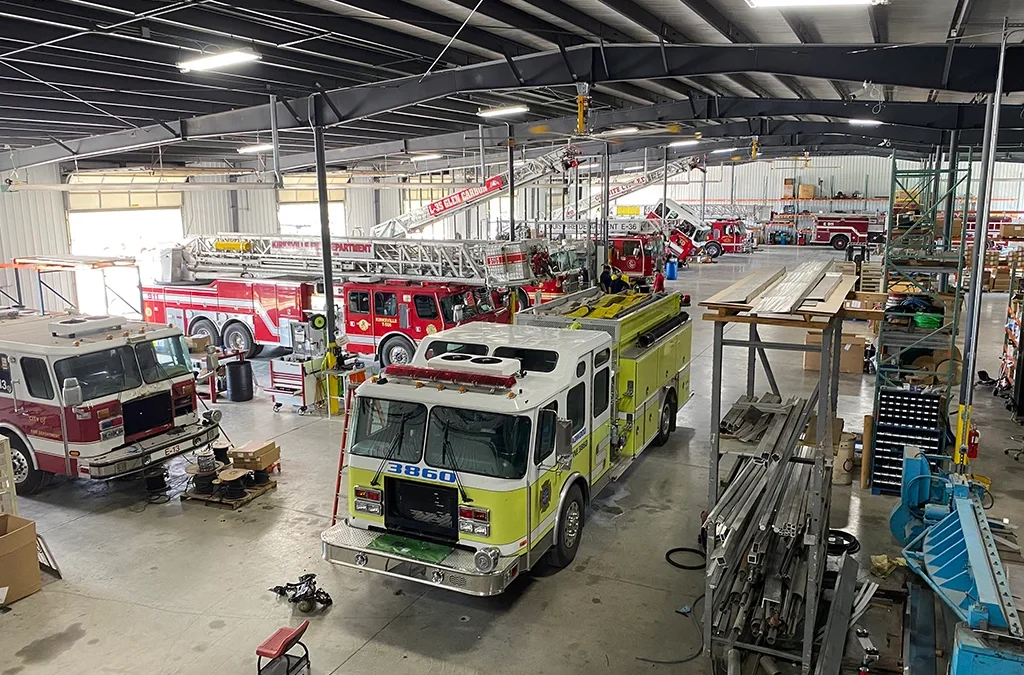
Service: The larger dealers are more likely to have a service department to address warranty (and beyond) service, testing, and preventive maintenance. Hopefully, their trucks are logoed, their staff trained and in uniform. They can invest in expensive diagnostic equipment and are good partners to the factory to get issues resolved promptly. They often have parts departments rather than sales reps or customer service people who could not pick a solenoid out of a lineup.
Purchasing power: Often the mega dealer has the maximum discount with its suppliers, which means a better deal for fire departments. We have gone against bigger dealers that sell to customers for the same price as my cost!
The suppliers appreciate their relationship and may go above and beyond to resolve an issue for one of their best dealers. They have the ability to have products in stock. Inventory is expensive, and sometimes fire departments need something ASAP. Amazon set the benchmark for fast, and these days it is difficult to tell someone that their lifesaving equipment is weeks away.
Longevity: This is a tough business, and only the strong survive. I think a lot of people in the fire service underestimate what it takes to sell and service in this business. The mega dealers have survived through tough times and have adapted and overcome some hard times. I think it best for fire departments to choose a dealer that is financially secure, has many resources to serve them, and will be around for the long haul. I have heard time and time again from departments that bought a new apparatus from ‘a guy’ and, once the check cleared, they were on their own.
Larger dealers often have established reputations and are more reliable, reducing the risk of issues with vehicle purchases or services.
Wider selection of inventory: Larger dealers often have a broader range of new and used trucks, including various stock trucks, models, and configurations, allowing fire departments to find the perfect match for their needs and reduce wait times for new apparatus.”